White Label Content Without a Writing Bench: AI and Trust Checklist
See how agencies scale white label content with a checklist, AI disclosure, experience, expertise, authority, and trust controls, plus partner delivery.
By Steve Sanford · 2026-10-20

White Label Content Without a Writing Bench: AI and Trust Checklist
White label content is unbranded, client-ready material produced by one party and sold to another for resale under that second party’s name. For agency owners, the payoff is direct: it lets us scale output, keep the client relationship, and sell content as a packaged service without hiring a full writing bench.
TL;DR:
- Smaller agencies can start with per piece orders or bulk subscriptions, while steady volume favors fixed monthly retainers or managed service with defined scope.
- Require each brief to specify the target keyword, audience, word count, tone references, and three competitor examples; provide three to five voice pillars and sample paragraphs.
- Define revisions separately from new requests, and quote rush work, original interviews, and custom graphics separately before production begins to protect retainer margins.
- Route every piece from writer through editor and brand reviewer to final quality check; record a named reviewer and review date for accountability.
- Disclose AI assistance in plain language, apply each platform’s required label, and publish scaled pages only when editors can explain their unique search value.
Table of Contents
- What White Label Content Actually Means
- Why Agencies Lean on White Label Content
- Models for Buying or Selling White Label Content
- Building a Rebrandable Content Pipeline: A Tactical Checklist
- Staying Compliant: Approval Workflows and AI Disclosure
- Qualifying a White Label Partner Worth Keeping
- FAQ
- Sources
What White Label Content Actually Means
White label content works on a simple split: one party produces it, another markets and sells it. The producer stays invisible; the agency’s logo, byline, and brand voice go on top. This differs from co-branded work, where both names appear, and from straight subcontracting, where the client often knows a third party is involved. With white label, the client sees only us.
Common deliverables include:
- Blog posts and long-form articles written to a brand’s voice and SEO targets
- Landing pages and email sequences built for a specific campaign
- Social media captions and post sets scheduled for a content calendar
- eBooks, guides, and templates sold or gifted as lead magnets
An agency that promises multiple blog posts per month to a retail client, then sources those posts from a white label writing partner, is running a textbook version of this model. The client never sees the supply chain, only the finished white-label product with the agency’s name on it.
Why Agencies Lean on White Label Content
Agencies turn to white label content for reasons that show up directly on the balance sheet.
- Speed and capacity: a ready supply of writers means we can say yes to a new retainer without a six-week hiring cycle.
- Margin protection: productized retainers with fixed deliverables let us quote a stable price while the cost of production stays predictable.
- Service expansion: we can add blog writing, social content, or email campaigns to our offer sheet without building an internal content team.
- Operational control: treating scope creep and AI-use policy as defined boundaries, not improvised decisions, keeps delivery consistent across clients.
The last point matters more than it looks. A content service without a written scope document drifts: extra revisions pile up, clients ask for “just one more” blog post, and margins erode quietly. Agencies that write client trust and scaled-content policy into the retainer from day one avoid that drift entirely.
Models for Buying or Selling White Label Content
White label content comes in a handful of delivery shapes, and the right one depends on client budget and how much hands-on management an agency wants to do.
- On-demand/per-piece: single articles or posts ordered as needed, useful for irregular volume but harder to budget around.
- Productized monthly retainer: a fixed set of deliverables (say, eight blog posts and twenty social captions) for a flat monthly fee, with scope spelled out in advance.
- Bulk subscription: a content bank or credit system where an agency draws down a set volume each month.
- Managed done-for-you (DFY): a partner handles research, drafting, editing, and CMS upload, with the agency acting as the brand-facing layer.
Smaller agencies tend to start with on-demand or bulk subscription models because they’re flexible and low-commitment. Larger agencies with steady client volume usually move to productized retainers or managed DFY, since predictable scope makes staffing and pricing easier. Scope boundaries matter regardless of model: define what counts as a revision versus a new piece, and what falls outside the retainer (rush turnarounds, extra interviews, complex formatting).
Building a Rebrandable Content Pipeline: A Tactical Checklist
Rebrandable content only works when it arrives clean enough to drop into a client’s voice with minimal editing. That starts with a standardized intake process, not a scramble every time a new brief lands.
- Lock a brief template: require target keyword, audience, word count, tone references, and three competitor examples for every request.
- Document brand voice: supply three to five voice pillars, two sample paragraphs, and a short list of forbidden words or phrases per client.
- Standardize file handoff: deliver content as CMS-ready markdown or HTML with metadata (title tag, meta description, alt text) attached, not buried in a separate document.
- Set turnaround SLAs: commit to a specific number of business days per piece and define what counts as a revision versus a new request.
- Write out-of-scope boundaries: rush jobs, original interviews, and custom graphics get quoted separately, in writing, before work starts.
Pro Tip: Keep structure and keyword targeting consistent across drafts, but leave brand-specific references, examples, and calls to action generic enough that a junior editor can localize them in under fifteen minutes.
A tight brief template does more work than any amount of editing after the fact. When a writer knows the forbidden words and has two real paragraphs of brand voice to study, the first draft needs far fewer passes, and that’s where the margin actually lives.
Staying Compliant: Approval Workflows and AI Disclosure
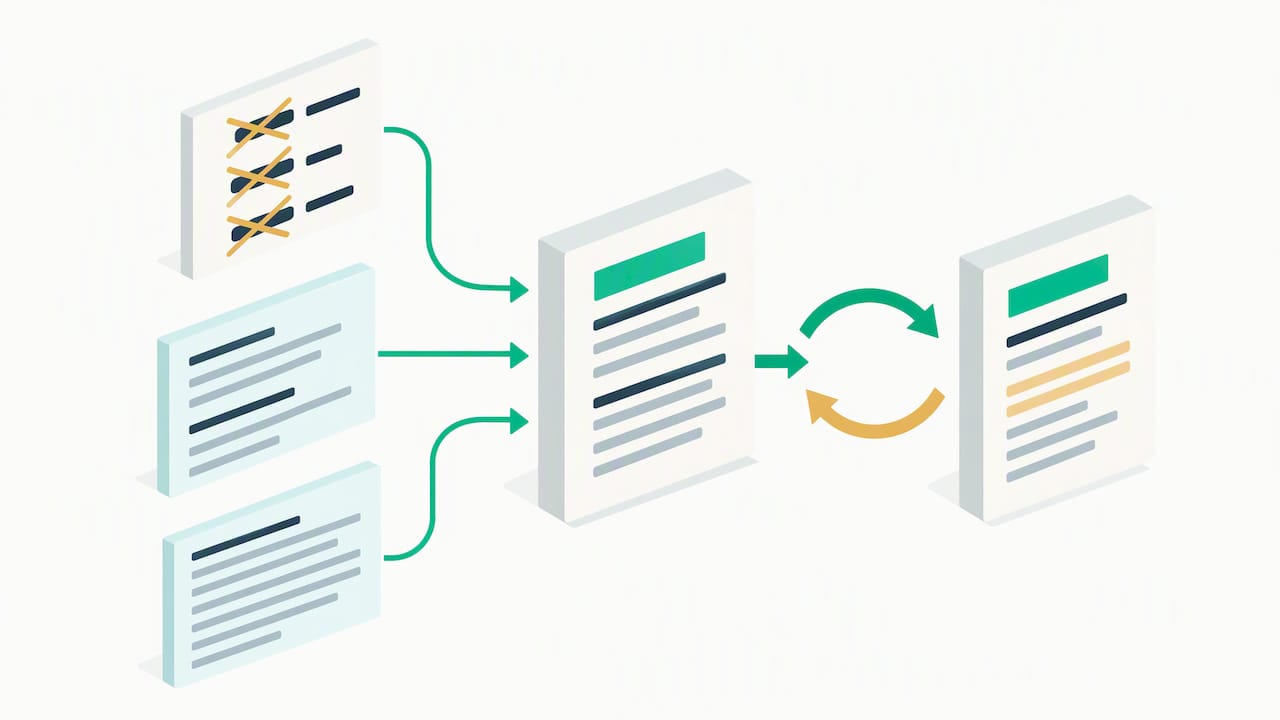
Operational controls are what separate a reliable white label partner from a liability. A workable approval chain runs writer to editor to brand reviewer to a final quality check before anything ships, and skipping a step shows up fast in client complaints.
AI disclosure belongs in the workflow for anyone using AI-assisted drafting. The FTC’s Endorsement Guides require clear disclosure of any material connection, and its 2024 rule bans fake reviews, including AI-generated ones; beyond that, name AI involvement in plain language like “AI-generated content” or “Created with the help of AI.” Platform rules stack on top of that: Meta labels AI material “AI info,” TikTok uses “AI-generated content,” and YouTube requires an “AI use” disclosure for realistic AI content, and ignoring these rules can mean penalties up to outright removal.
- Attach provenance metadata (C2PA) to AI-assisted images before delivery.
- Keep a named reviewer and review date on every article for accountability.
- Apply platform labels at the point of scheduling, not as an afterthought.
- Document the approval chain so any piece can be traced back to a human sign-off.
Google’s scaled-content abuse policy targets volume produced primarily to manipulate rankings, not individual AI-assisted articles. The practical test: one sentence should explain what a given page adds beyond what’s already on page one of search results. If no one on the team can write that sentence, the page needs more editorial value before it ships.
Qualifying a White Label Partner Worth Keeping
Before signing with any provider, we’d check four things: deliverable formats that drop straight into a CMS, evidence they actually match brand voice rather than guessing, proof of human review on every piece, and pricing that’s stated plainly, in writing, before work starts.

Our done-for-you content service runs on exactly that model: Contero IQ™ aligns each piece to a client’s voice, every draft gets human approval before it ships, and pricing is quoted on a 15-minute call, based on your channels and cadence. For agencies that want white label content without managing writers directly, Contero can also run inside your agency, with self-serve plans from $79 a month.
FAQ
What is white label content?
White label content is material, such as blog posts, social captions, or landing pages, produced by one party and sold to another for resale under the buyer’s own brand. The buyer’s name, logo, and voice appear on the finished piece; the original producer stays unnamed.
What is considered a white label product?
A white label product is any good or service made by one company and rebranded for sale by another, a model that originated with manufactured goods and now extends to software and content services. The defining feature is that the end customer sees only the reselling brand, never the original producer.
Is white labeling illegal?
White labeling itself is a standard, legal business arrangement used across manufacturing, software, and content services. What matters legally is disclosure where required, such as material-connection disclosures under FTC rules and AI labels under platform rules, and clear ownership terms in the contract between producer and reseller.
What are the best white label products to sell?
The strongest white label products are ones with consistent demand and room for brand differentiation at resale, such as managed content services, software platforms, and supplement or skincare lines. For agencies specifically, productized content retainers tend to perform best because scope and pricing stay predictable.