The Real AI Danger for Small Business Isn't the Model
The real danger small businesses face isn't which frontier model (American or Chinese) might be 'too dangerous' in some abstract national-security sense, it's the near-total absence of internal governance around how employees actually use these tools: what data gets pasted into public chatbots, whether outputs get human review before hitting legal, financial, or customer-facing decisions, and whether vendors can be held to contractual data-protection standards. Contero's job isn't to referee which model is 'safe,' it's to replace influencer-grade reassurance with cited evidence on the mundane, well-documented risks (data leakage, hallucinated outputs in regulated decisions, vendor lock-in) that actually determine whether a small business gets hurt.
By Steve Sanford · 2026-07-14

The Real AI Danger for Small Business Isn't the Model
While headlines debate whether a frontier AI model is too dangerous to release, a small business owner two states away just pasted a client's financial records into a free chatbot to draft a proposal. That's the moment that actually determines whether AI hurts your business, not which lab built the model or which government approved it for export.
Case in point: this summer, the U.S. government temporarily pulled export approval for Anthropic's Fable 5 and Mythos 5 models after Amazon researchers found a way to get the system to walk through a software security exploit [1]. It made for a dramatic news cycle. Commerce Secretary Howard Lutnick personally weighed in.[1] Critics accused Anthropic of manufacturing fear to sell a "bomb shelter" [1].
Within days, the models were back, with the exploit blocked in over 99% of attempts [1]. Interesting story. Almost entirely irrelevant to whether your -person insurance agency should let staff use ChatGPT to draft client emails.
Everyone's Watching the Wrong Threat
The frontier-model safety debate is real, and it matters at a national security scale. But it's not the risk that shows up in a small business owner's inbox. Government cybersecurity guidance built specifically for small businesses doesn't spend much time on which model is "too powerful." It spends its time on data leaks, unreliable outputs, and vendors you can't hold accountable [2].
That's a different conversation entirely, and it's the one almost nobody outside a compliance department is having. You've watched the YouTube tutorials. You've tried a chatbot or two. Somewhere in there, you probably absorbed the idea that the real risk is picking the "wrong" AI company.
It's an understandable read of the headlines. It's also not where the damage actually happens.
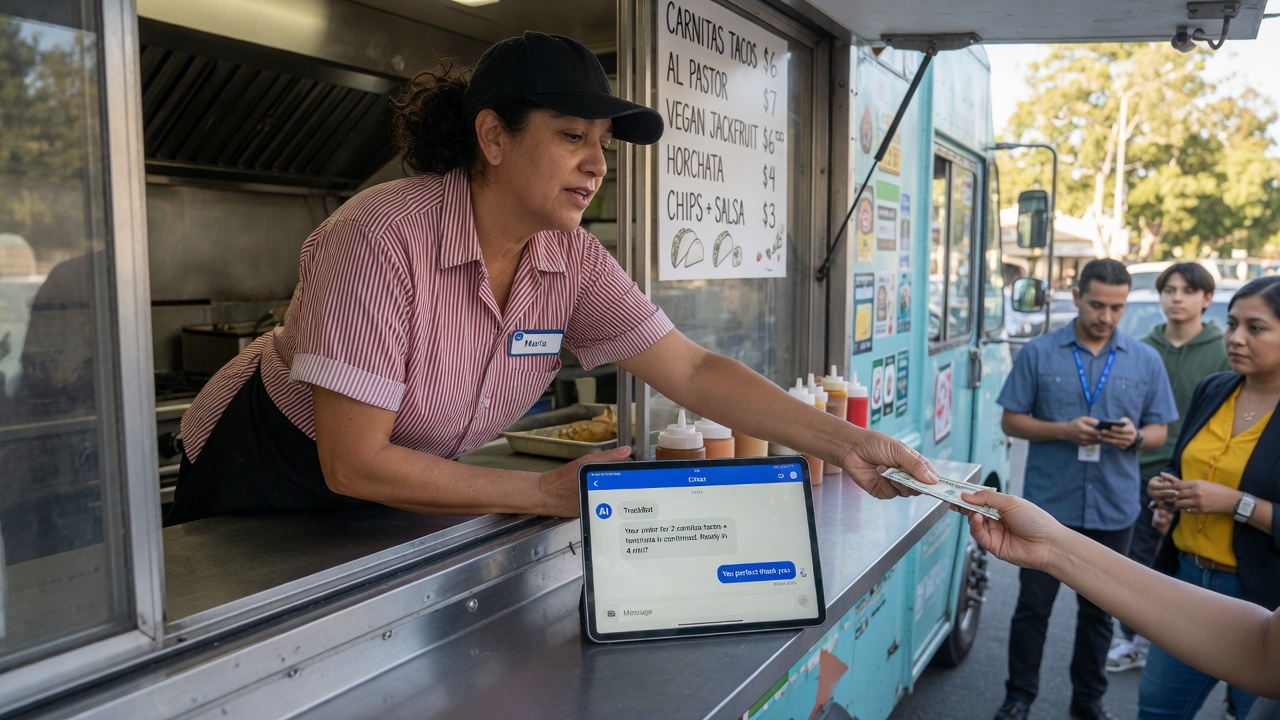
What "Dangerous" Actually Means for a -Person Company
Official guidance frames AI risk for small businesses in four concrete buckets: data leaks and privacy breaches, unreliable or manipulated outputs, supply-chain vulnerabilities tied to third-party vendors, and unreviewed use of AI in legal, medical, or financial decisions [2]. None of that requires a government export ruling to identify. None of it depends on knowing which country built the underlying model.
Data leakage is the most immediate one. When an employee pastes client data, financials, or proprietary documents into a public AI tool, that information can leave the business's control the moment it's submitted [2]. The tool doesn't need to be malicious. It just needs to be public, and the business needs to lack a policy telling employees what's off-limits.
Unreliable outputs are the second bucket, and this one has real teeth in regulated decisions. The guidance is explicit: in any scenario touching legal, medical, or financial advice, a qualified person needs to review the AI's response before anyone acts on it [2]. Not because the model is untrustworthy in some abstract sense, but because AI systems generate confident, well-formatted answers that are sometimes flat wrong, and a small business rarely has the internal review layer to catch that before it reaches a customer or a contract.
The Governance Gap Nobody's Selling You a Fix For
Here's the uncomfortable part. Most of the AI content flooding small-business owners isn't about governance. It's about speed: write faster, post more, automate the grind. Speed is table stakes. It's not nothing, but it's not the thing separating businesses that get hurt from businesses that don't.
What actually determines outcomes is whether a business has answered a short list of boring, unglamorous questions before employees start typing into a chatbot:
- What categories of data are employees allowed to paste into a public AI tool, and what's strictly off-limits?
- Does any AI output touching legal, financial, or customer-facing decisions get human review before it goes out [2]?
- Has anyone actually read the vendor's data handling and privacy terms, or are you assuming "reputable" means "safe"?
- What happens if that vendor has a breach? Do you know their incident notification process?
Small businesses that skip these questions aren't gambling on a dangerous model. They're gambling on the absence of a system. And that's a solvable problem, not a mysterious one.
Vendor Trust Beats Model Reputation
Government guidance is direct on this point: businesses should choose AI vendors that are transparent about data handling, committed to security, and compliant with relevant privacy regulations, and they should keep evaluating that vendor's track record over time [2]. That's a due-diligence exercise, not a debate about whose foundation model is scarier.
It's worth sitting with why this matters more than model selection. A frontier lab's safety controversy plays out in export rulings and Commerce Department letters. A small business's data exposure plays out in a support ticket, a leaked client file, or a bad financial recommendation that a customer acted on without anyone checking it first. One of those stories gets a Forbes headline. The other one just quietly costs a business its reputation with the one client who finds out.
Supply-chain dependency is the piece owners tend to underweight. When your content, your customer communication, or your financial modeling routes through a single AI vendor with no contractual guarantees, you've built a dependency you don't control [2]. That's not a hypothetical. It's the same lesson enterprise-only businesses learned the hard way when a single client category disappeared overnight during COVID: concentration without a fallback plan is fragile, whether the concentration is in one client vertical or one unvetted vendor.
Building the System Instead of Doing the Task
There's a meaningful difference between using AI and doing tasks with AI. Copy-pasting a prompt into a chatbot, getting an answer, and moving on isn't a system. It's a habit, and habits don't have governance built in. A system has a defined input boundary (what data goes in), a defined review layer (who checks the output before it matters), and a defined vendor relationship (what you can hold them to contractually).
Most small businesses have none of these three. They have an employee who found a tool that works and started using it. That's fine for drafting a first pass of marketing copy. It's not fine for anything touching a regulated decision, a client's sensitive data, or a customer-facing commitment.
The businesses getting real value out of AI right now, without getting burned, tend to share one habit: they treat every new AI use case as a small pilot first. Try it on low-stakes work. Watch what breaks. Add a review step wherever the output touches a decision that costs money or exposes the business legally. Then scale it. That's not a compliance lecture, it's just how you build a resilient practice instead of a fragile one.
What This Means for Content and Communication Specifically
If you're using AI to generate blog posts, social content, or customer communication, the governance questions are the same, just lower-stakes than legal or financial decisions. Are you feeding it client information it shouldn't have? Is a human checking the output before it goes live under your brand's name? Does the tool you're using actually protect your data, or are you trusting a vendor's marketing copy instead of their actual terms?
This is where the "Human-Prompted and Human-Approved" model earns its keep. AI can draft fast. It can research fast. What it can't do on its own is guarantee that the output sounds like you, protects your client relationships, and won't embarrass your brand in front of the one prospect who's evaluating whether to trust you. That review layer isn't friction. It's the governance small businesses are otherwise skipping entirely.
Frequently Asked Questions
Is AI actually dangerous for small businesses, or is that overblown?
The frontier-model safety debates making headlines are largely irrelevant to day-to-day small business risk. The real, documented dangers are data leakage from pasting sensitive information into public tools, unreliable outputs used without review, and vendor relationships with no accountability built in [2].
What data should employees never paste into an AI chatbot?
Client financial records, proprietary business documents, source code, and any personally identifiable customer information shouldn't go into public AI tools without a clear data-handling policy in place [2].
Do AI outputs need human review before they're used?
Yes, especially for anything touching legal, financial, or customer-facing decisions. Official guidance specifically recommends a qualified person review AI-generated responses in these areas before anyone acts on them [2].
How do I evaluate whether an AI vendor is trustworthy?
Look for transparent data handling and privacy policies, clear compliance with relevant regulations, and a track record of security commitment, and revisit that evaluation periodically rather than treating it as a one-time check [2].
Start With the Questions, Not the Headlines
The next time an AI safety story dominates the news cycle, ask yourself a more useful question: does your business have a written answer for what data employees can and can't paste into a chatbot, and who reviews the output before it reaches a customer? If you don't, that's the gap worth closing this week, not the one making headlines. Building that system, even a rough first version, does more for your business than picking the "safest" model ever could.
Sources
- Here Are The Safety Concerns That Anthropic’s Fable 5 and Mythos 5 Faced (forbes.com)
- Artificial intelligence for small business (cyber.gov.au)
Researched from 3 vetted sources · average source authority DR 91